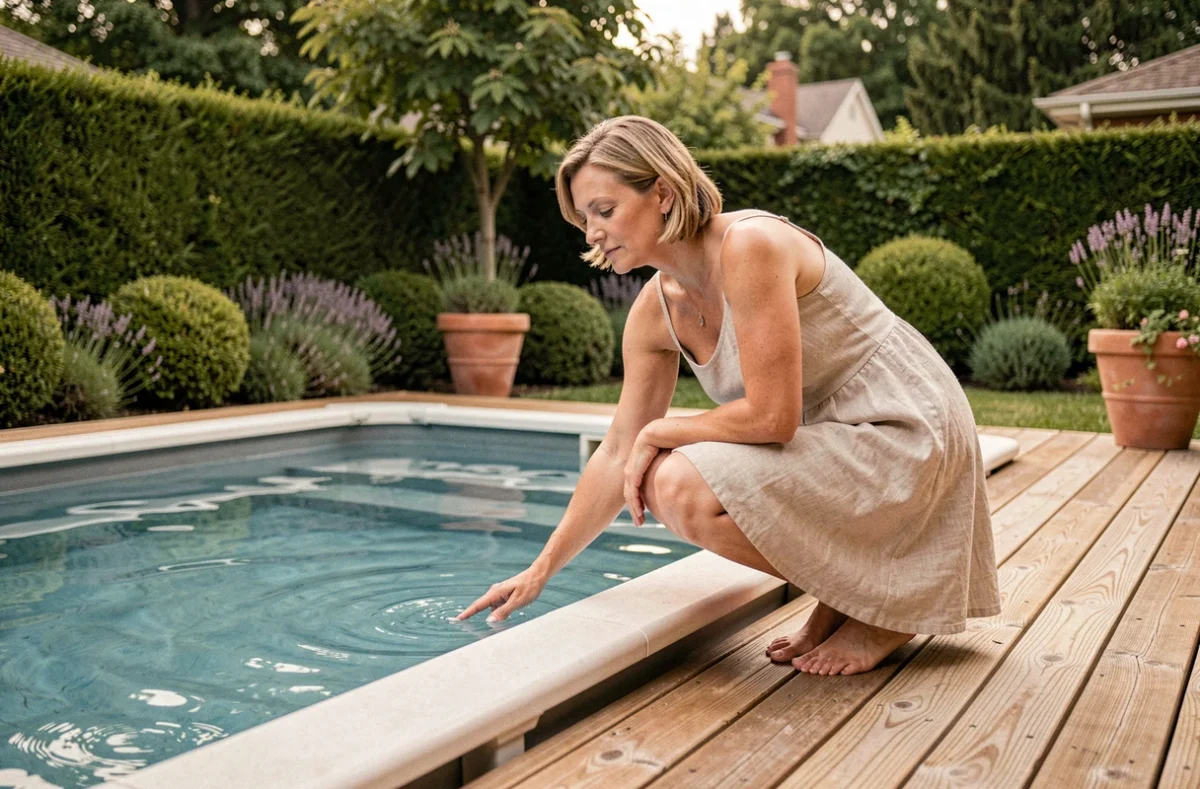
Installing a swimming pool in your garden means making decisions about the type of pool, materials, landscaping and budget. Before even browsing catalogs of shapes or finishes, one factor determines whether the project is viable: water availability and local regulations. Prefectural water-use restrictions, the local urban planning scheme and municipal taxes all determine what you can build, fill and maintain over the long term.
Water restrictions and local rules: the real first criterion when choosing a pool
Filling a pool for the first time takes several cubic meters of water, and topping it up regularly during the summer requires more. During droughts, prefectures issue orders that may prohibit filling or partially draining private pools. These measures vary from one department to another and sometimes change during the season.
Before making a purchase, check the orders in force in your municipality and find out whether your property is in an area subject to recurring restrictions. A pool you cannot fill in summer loses most of its usefulness. Owners of existing pools should also keep an eye on these notices every year.
The pool’s volume then becomes a technical trade-off: a compact pool (under ten square meters) uses less water to fill and maintain, while a large lap pool requires a substantial supply. Considering a pool cover helps limit evaporation and reduces how often you need to top it up. Subscribers to The Blog de Coco’s pool section will find practical insights into these trade-offs between pool volume, covers and water consumption.
Planning requirements and taxes: how the type of pool makes a difference
Competitors rarely discuss the link between the type of pool and the administrative requirements that come with it. The thresholds for planning formalities depend on the pool’s surface area, as well as how long it will be installed and the property’s zoning classification.
In-ground or semi-in-ground pool
Above a certain surface area, a prior works declaration is required, and the largest pools may need a building permit. Rules are stricter in protected areas (near historic monuments or in designated sites), even for small pools.
An above-ground pool is not automatically exempt from planning formalities. If it remains installed for more than three months a year or exceeds certain dimensions, the local urban planning scheme may require a declaration. Checking the local planning rules and the property’s status before buying helps avoid unpleasant surprises.
Taxes after construction
Building a pool can affect property tax and, in some cases, incur a development tax. The amount depends on the planning permission obtained and the rates set by the municipality. Declaring the pool to the tax authorities within 90 days of completion is a separate step from filing the works completion declaration with the town hall. Forgetting either one may result in a tax adjustment.
Pool types and materials: tailoring the project to your garden
Once the regulatory requirements are clear, the choice of pool depends on the layout of the property, the overall budget and how you plan to use it. Three options dominate the market:
- A prefabricated polyester shell pool can be installed in just a few days. It is suitable for gardens accessible to lifting equipment and is easy to maintain thanks to its smooth surface.
- A concrete pool (built with masonry or sprayed concrete) can be made in any shape or size. It suits sloping sites and unusual layouts, but construction takes several weeks.
- An above-ground pool made of wood or steel is the quickest option to install. It suits tighter budgets or renters, provided you check the planning requirements mentioned above.
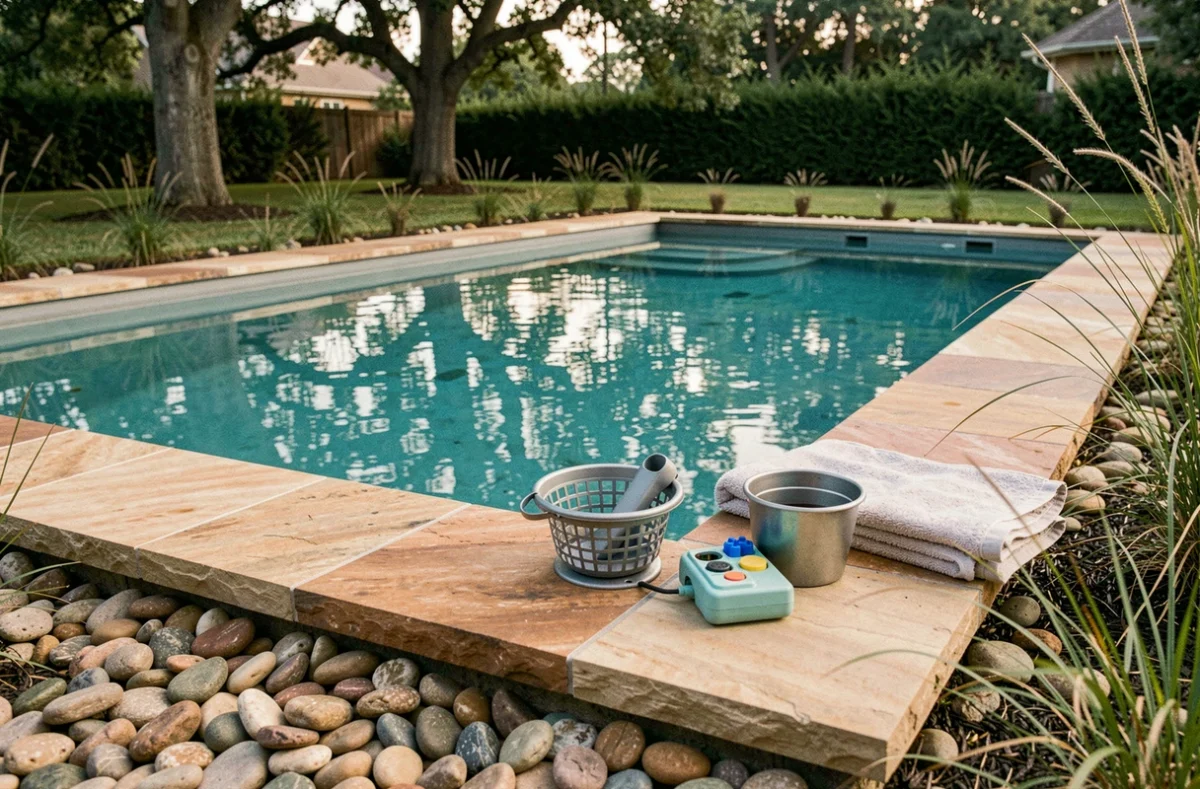
The interior finish affects both durability and maintenance costs. A liner needs replacing every ten to fifteen years. Plaster or tile lasts longer but costs more to install. The choice of coping material (natural stone, composite wood or exposed aggregate concrete) affects how well the pool blends into the garden and how safe it is to walk on barefoot in summer.
Landscaping around the pool: plants, surfaces and safety
The area around the pool deserves as much attention as the pool itself. Thoughtful landscaping makes maintenance easier, improves safety and enhances your enjoyment of the pool.
Plants suited to the pool area
Evergreen plants that do not shed their leaves help keep debris out of the water. Ornamental grasses, lavender and agapanthus tolerate the heat reflected by the pool surround and do not produce fruit that stains the coping. Avoid trees that shed a lot of leaves within five meters of the pool to spend less time cleaning the surface.
Pool surround and access
The pool surround should be slip-resistant, chlorine-resistant and easy to clean. Composite wood, reconstituted stone and porcelain stoneware are among the most common options. A gentle slope away from the pool drains rainwater without letting it run into the water.
Safety: a legal requirement
Regulations require private in-ground and semi-in-ground pools to have one of four standardized safety systems:
- Safety barrier (NF P90-306 standard)
- Safety cover (NF P90-308 standard)
- Audible alarm (NF P90-307 standard)
- Pool enclosure covering the pool (NF P90-309 standard)
One of these systems is sufficient, but it must comply with the relevant standard. Above-ground pools are not subject to this requirement if removing the ladder makes access impossible, provided the wall is high enough to effectively prevent access.
Routine maintenance and the true cost of a garden pool
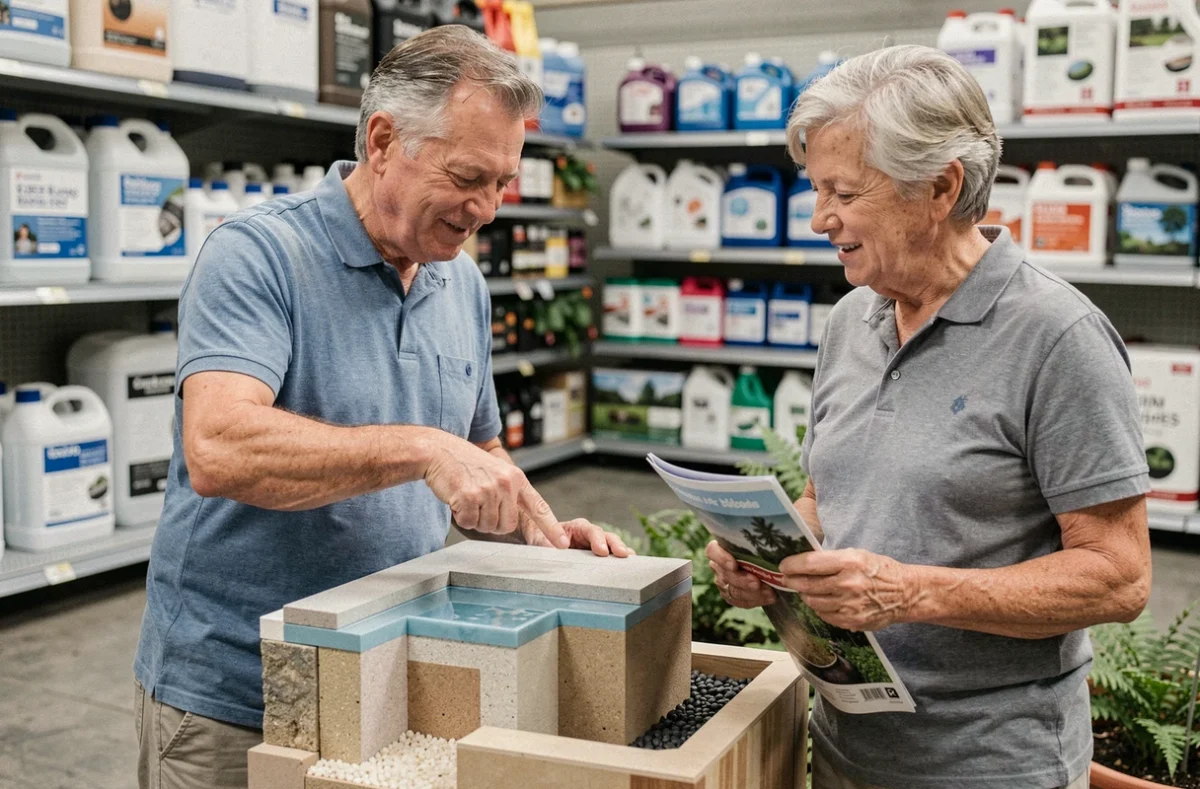
A pool’s budget is not limited to the construction quote. Every swimming season brings recurring expenses: water treatment products, electricity for the filtration pump and replacement consumables (filter, liner, seals). Water consumption, mentioned above, is another variable cost that depends on the local climate and how often restrictions are imposed.
Planning for annual maintenance costs helps avoid unpleasant surprises after the first season. A properly sized filtration system, a cover used whenever the pool is not in use and regular water treatment extend the life of the equipment and reduce the need for costly repairs.
Water consumption remains the common thread running through any garden pool project. Choosing a pool suited to your municipality, property and budget, then maintaining it carefully, lets you enjoy it without administrative surprises or unexpected bills.