
Madagascar concentrates on a single territory ecosystems that are found nowhere else, from the coral reefs of the Mozambique Channel to the misty forests of the Highlands. When choosing leisure activities in Madagascar, the question is not so much “what to do” as “in which season, in which region, and according to what access model”. It is this filter that distinguishes a successful stay from an improvised itinerary in the face of a blocked path.
Season and Region: The Filter That Activity Lists Ignore
Most guides present Malagasy activities as available year-round. The reality is more nuanced. The rainy season does not close the island, but it reshuffles the cards according to geographical areas.
| Region | Accessibility in the Rainy Season | Activities Available |
|---|---|---|
| Southwest (Toliara, Ifaty, Anakao) | Favorable | Beaches, lagoons, fishing villages, snorkeling |
| Highlands (Andasibe, Antsirabe) | Accessible with a flexible itinerary | Lemur observation, crafts, light hiking |
| Isalo | Accessible | Trekking, natural pools |
| West (Tsingy de Bemaraha) | Very difficult (tracks and ferries disrupted) | Access often closed or risky |
This table changes the game for families with children. Planning a stay around the Tsingy de Bemaraha in January exposes one to impassable roads. In contrast, the southwest remains a safe bet for nature and beach outings even during the wet season.
Cyclone alerts add a layer of complexity. The blue level signals residual risks even after the cyclone has passed: flooding, landslides, dangerous sea. Planning fallback activities (crafts, markets, village visits) is not a luxury, it is a logistical necessity.
Community Ecotourism in Madagascar: An Alternative to Traditional Tours
National parks capture attention, but a parallel offer is being structured around reserves managed by village associations. The Anja community reserve is a documented example: the guides are local, governance is village-based, and entrance fees are reinvested in the community’s priorities.
This model changes the experience for visitors. Instead of a marked circuit in a national park, one participates in a local economy. Children find direct contact with locals, teenagers discover a different collective functioning, and adults access less crowded places.
Around Andasibe, an offer combining nature, crafts, and local know-how is also developing. Community lodge projects combine accommodation, workshops in basketry or Malagasy cooking, and guided forest outings led by village guides. To spot this type of proposal, the Gasy site for leisure lists activities that are outside the usual tourist circuits.
Community ecotourism reinvests revenues directly into the village, creating a concrete link between the visitor’s leisure and the local economy. This is not a marketing argument: it is a verifiable management model on the ground.
Nature Activities for Children and Families in Madagascar
Lemur observation remains the most accessible activity for all ages. Guided tours at dawn offer the best observation conditions in the humid tropical forest.
For families, three criteria distinguish a successful nature outing from an exhausting day:
- Walking duration: the short circuits of Andasibe are suitable for young children, while Isalo offers flexible routes with natural pools as a reward
- Guidance: a certified local guide adapts the pace and spots wildlife well before the visitors, turning the walk into a game of observation
- Road accessibility: some parks require several hours of rough tracks, a factor to consider when traveling with young children
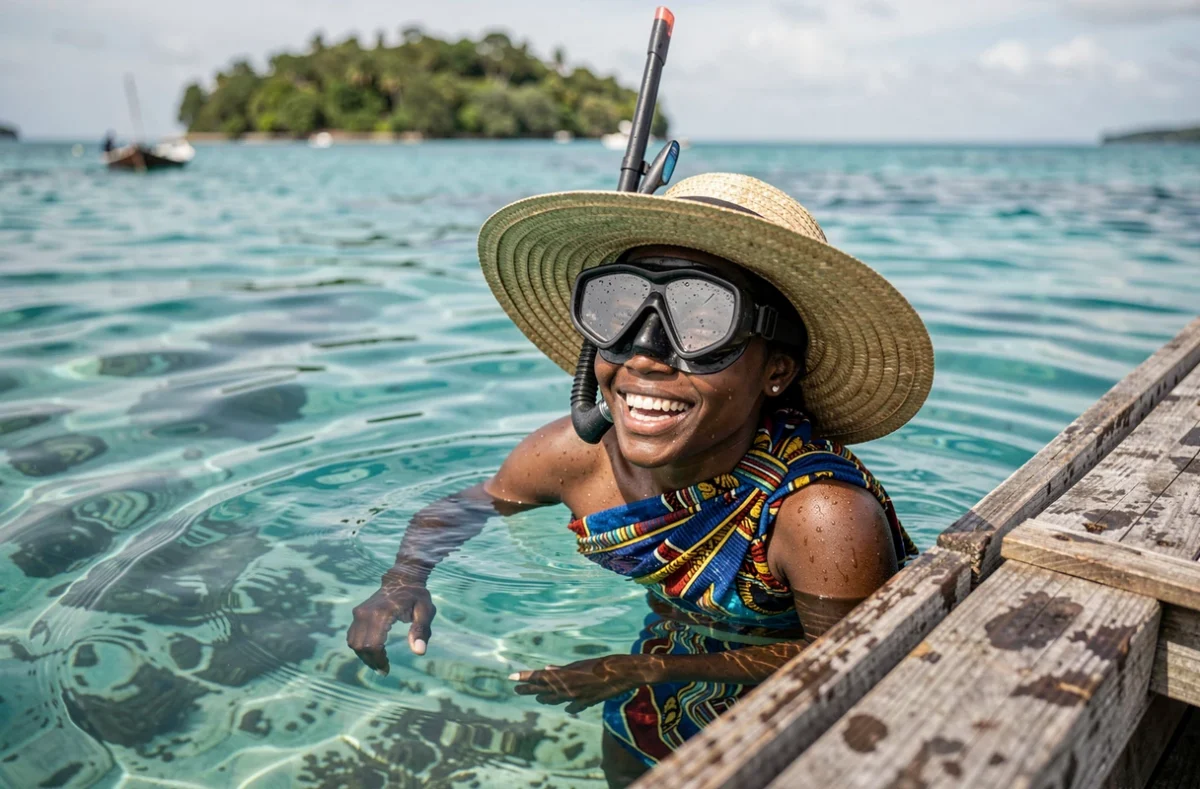
Snorkeling around Nosy Be is an option for children who can swim. The shallow lagoons allow for guided initiation. In contrast, traditional canoeing on the Pangalanes canal works for all ages, with a slow pace and a landscape that unfolds without physical effort.
Safety and Access: Concrete Selection Criteria for Leisure Activities
Travel advisories recommend avoiding night travel on Malagasy roads. This point is not trivial: it directly conditions the choice of activities and their sequencing throughout the day.
Access to a site should be evaluated as a selection criterion for the activity itself. A beautiful park at the end of ten hours of rough track is not a realistic option for a family with young children. The taxi-brousse, a local transport mode, offers a cultural experience but imposes constraints on comfort and duration.
- Favor sites accessible from Antananarivo in less than half a day (Andasibe, Anja reserve) for short stays or with children
- Reserve more isolated destinations (Tsingy de Bemaraha, extreme south) for travelers with several days and an appropriate vehicle
- Check the condition of the tracks before departure, especially between December and March
Road safety weighs as heavily as the site’s appeal in choosing a leisure activity in Madagascar. Travelers who incorporate this parameter from the planning stage avoid lost days in transfers and uncomfortable situations.
Madagascar is not lacking in activities for all ages. What is often missing is a framework that intersects season, region, accessibility level, and traveler profile. The southwest in the wet season and the Highlands in the dry season form the two most reliable combinations for varied leisure without logistical surprises.