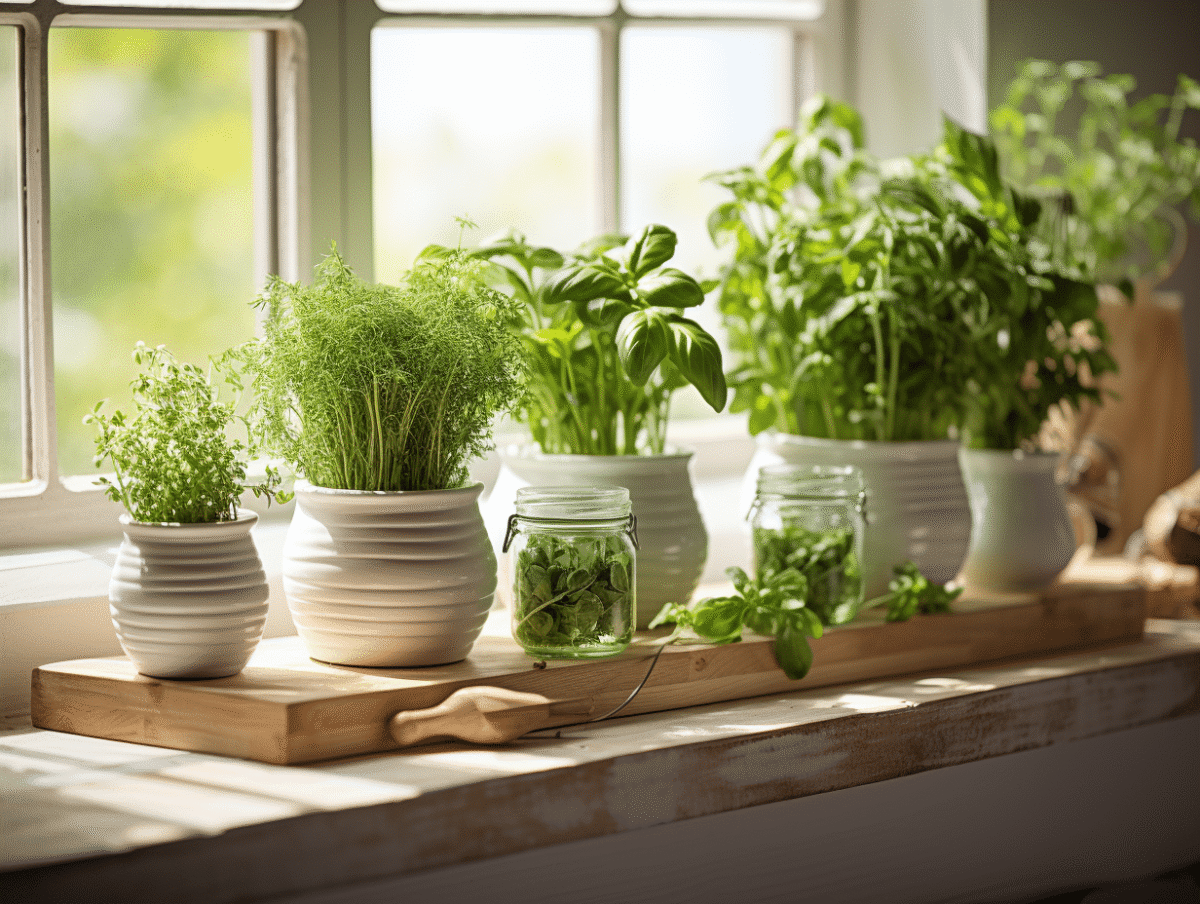
Having an herb garden in your kitchen is not just a way to bring an aesthetic touch of greenery to your space, it is also an invitation to rediscover the joy of cooking with fresh ingredients at your fingertips. Imagine the satisfaction of chopping freshly picked basil for a homemade pizza or infusing a sprig of thyme into a simmering stew. This green corner transforms your culinary routine into a rich sensory experience while ensuring a continuous supply of exquisite flavors and aromas.
Essential Steps to Grow Herbs in Your Kitchen
Carefully select herbs suitable for indoor cultivation, such as rosemary, thyme, basil, mint, chives, parsley, tarragon, and chervil. Each of these herbs finds its place in the kitchen, not only for their taste qualities but also for their ability to be grown in pots. Prefer seeds or already developed plants for a quicker start to your herb garden.
Choose pots that are appropriately sized for the plant, equipped with drainage holes to prevent excess water. The relationship between the pot and the herb is crucial: a pot that is too small hinders growth, while a pot that is too large promotes moisture. Fill these containers with potting soil specifically for herbs, a light and rich substrate that encourages rooting and the health of your plants.
Position your pots in a spot in your kitchen where light is abundant. Herbs like rosemary and thyme require a lot of light and a sunny location to thrive. In contrast, mint and chives tolerate a bit less light. Les Embellies Déco resides in the art of placing your herbs so that they benefit from optimal conditions while beautifying your space.
Water carefully and regularly, adjusting the amount of water to the specific needs of each plant. Basil, for example, requires more abundant watering, while rosemary and thyme need less water. Be attentive to the signs your plants may send you, such as wilting or yellowing leaves, which often indicate a need for water or, conversely, overhydration. Watering is a delicate dance, a balance to maintain to ensure the vigor and flavor of your herbs.
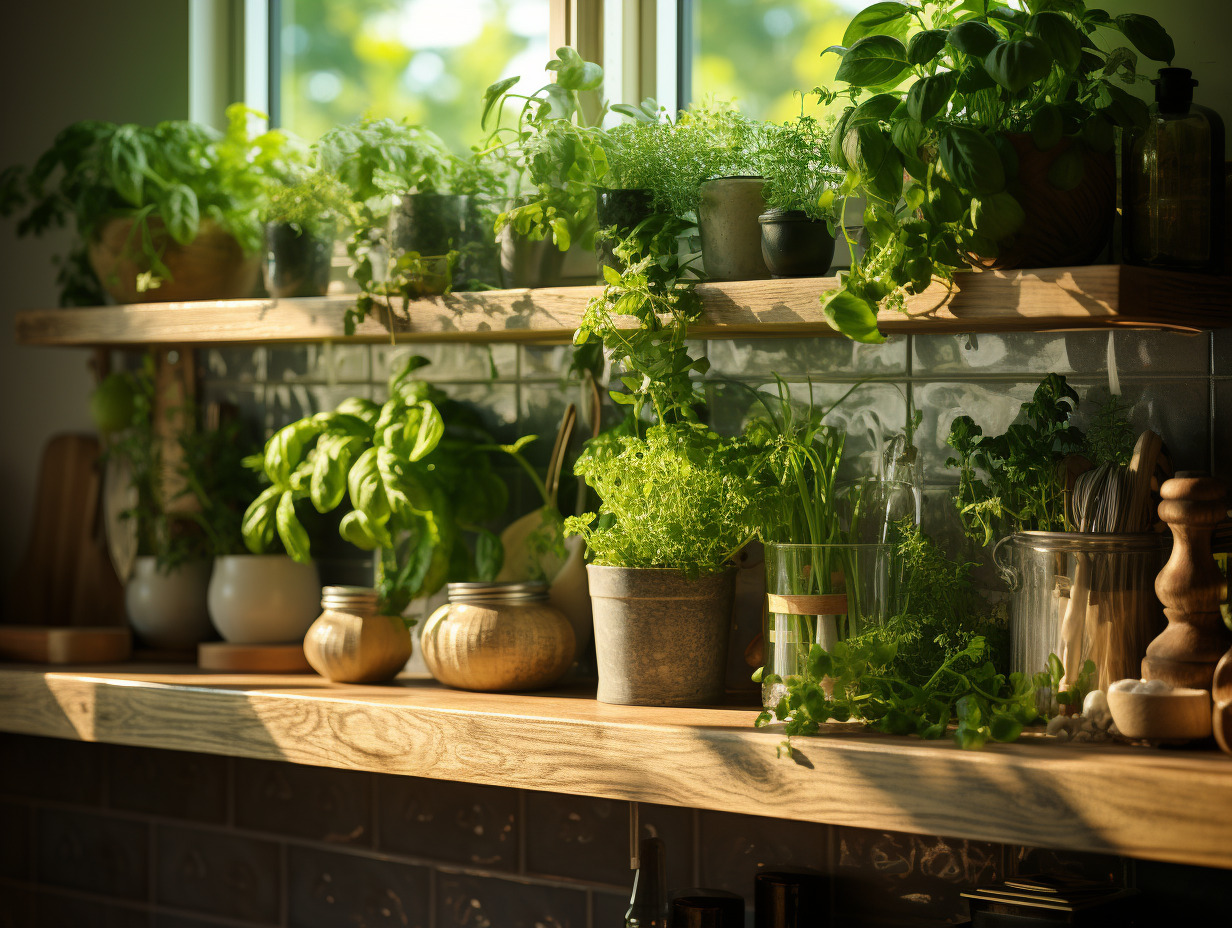
Maximizing the Growth and Flavor of Your Herbs
The success of your herb garden in the kitchen depends on the attention you pay to their specific needs. Each plant has its own requirements in terms of light and watering. Rosemary and thyme, for example, thrive with abundant sunlight exposure, while mint and chives accept shadier conditions.
Adapt the watering to the signs your plants emit. Wilting foliage may indicate a need for water, while yellowing leaves can signal excess moisture. Watering should be adjusted: generous for basil, moderate for rosemary and thyme, regular but not excessive for mint and chives.
Fertilizer is another growth factor not to be overlooked. Use an organic fertilizer suitable for aromatic plants to enrich the potting soil and stimulate healthy growth. This nutritional input should be dosed sparingly to avoid burning the roots or harming the flavor of the herbs.
The harvesting of herbs is an art in itself. Proceed gently, cutting the stems just above a set of leaves to encourage branching and plant density. Harvest regularly to stimulate the production of new shoots, but always in moderation to avoid weakening your herbs.