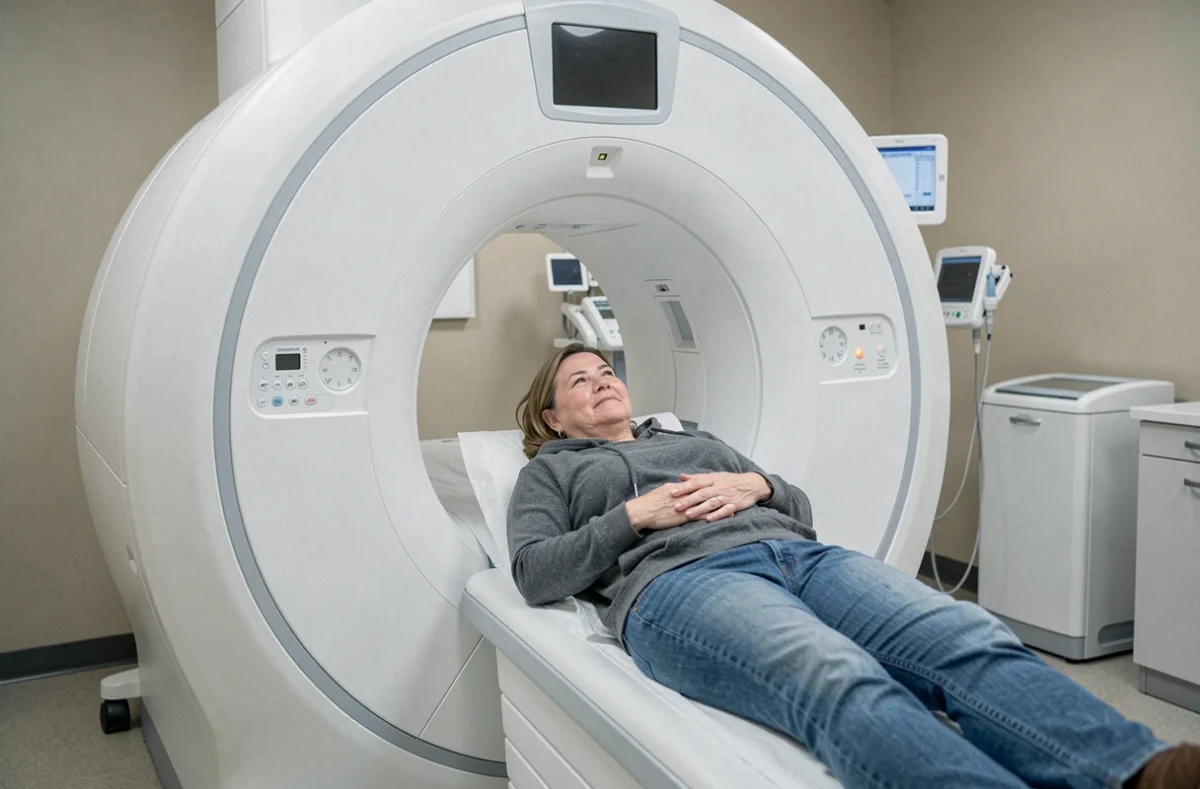
Getting an MRI when you dread enclosed spaces often follows the same scenario: you postpone the appointment, look for alternatives, and ask those around you. The open MRI comes up regularly in these discussions as a possible solution. Feedback from patients who have tried this option helps to better understand what it concretely changes and what it does not resolve.
Comfort versus resolution: the trade-off that no one details
Most pages dedicated to open MRIs emphasize the comfort gain. This is real, but incomplete. Open systems often operate at lower intensity than traditional closed machines. The result: the image obtained may lack detail for certain indications.
For a knee or shoulder examination, the difference in resolution is generally acceptable. However, when the radiologist is looking for very small lesions (such as in certain brain scans), a closed high-intensity machine is often preferable.
Have you ever noticed that your doctor sometimes specifies the type of machine on the prescription? This is exactly why. If you check the patient reviews on open MRIs for claustrophobes, you will see that this point often comes up: several report a second examination in a closed tunnel after an initial open MRI deemed insufficient by the radiologist.
The open MRI is not suitable for all medical indications. Before choosing a center based solely on comfort, it is better to check with the prescriber that the open machine will suffice for the requested examination.
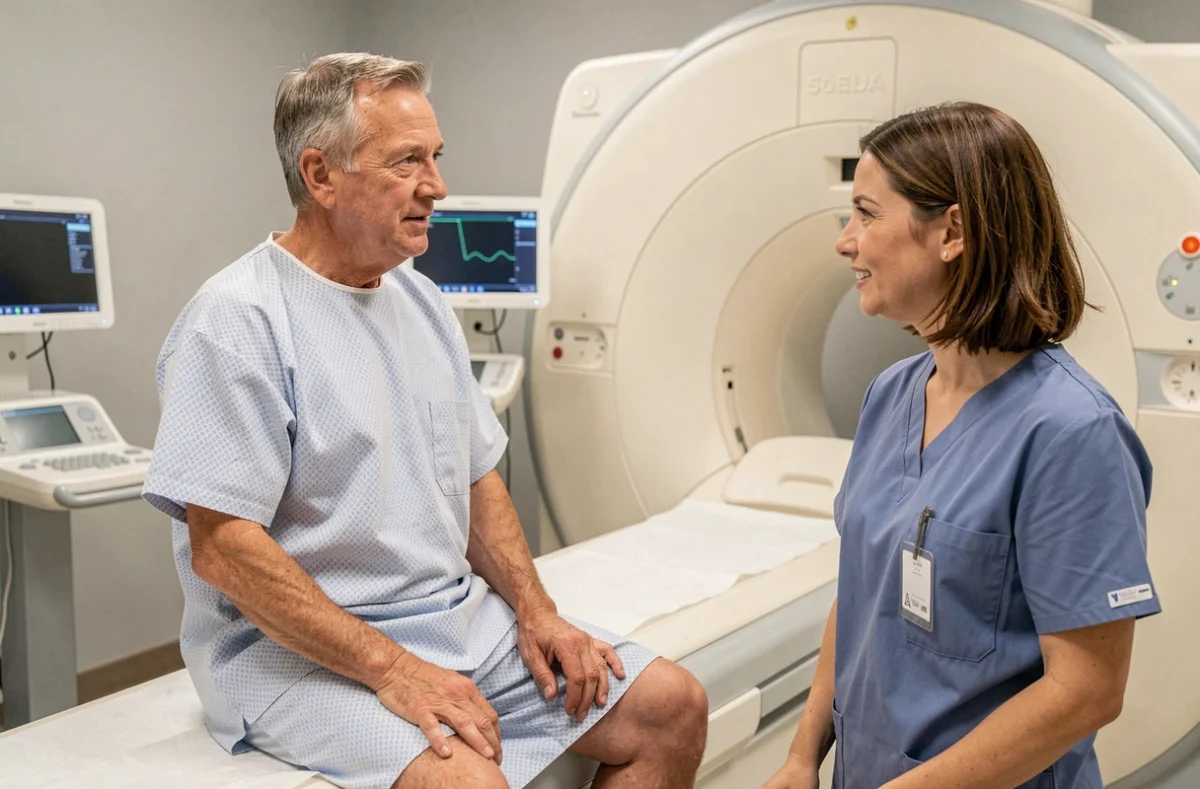
Open MRI: what patients really describe
The most commonly shared feeling concerns the space around the body. The open MRI eliminates the sensation of lateral confinement: the patient lies between two plates, with the sides clear.
Reduction of anxiety during the examination
Claustrophobic patients report that the open field of vision on the sides radically changes their level of anxiety. Some describe being able to turn their head, see the room, and spot the technician. This visual contact with the environment is sometimes enough to make the examination bearable without any medication.
The noise remains a stress factor
One point that patient feedback regularly mentions is noise. The open MRI produces the same series of clicks and vibrations as a closed machine. For those whose anxiety is triggered by both noise and confined spaces, the comfort gain is real but partial.
Most centers offer headphones or earplugs. Requesting headphones with music at the time of booking is one of the most common recommendations in testimonials.
Step-by-step approach to managing claustrophobia in MRI
A synthesis published in September 2026 in the Global Journal of Public Health and Medicine describes a graduated approach to managing claustrophobia in MRI. The idea is not to jump directly to sedation or open MRI but to proceed in stages.
- Prepare the patient in advance: detailed explanation of the procedure, room visit if possible, abdominal breathing exercises to practice before the big day.
- Identify at-risk profiles early during the appointment booking through targeted questions about past anxiety in enclosed spaces.
- Offer distraction solutions during the examination: music, virtual reality headset in some centers, continuous communication with the technician.
- Reserve the open MRI or wide tunnel for patients whose anxiety persists despite preparation.
- Keep pre-medication (light anxiolytic on prescription) as a fallback for the most difficult cases.
The diameter of the tunnel is not the only factor that reduces anxiety. This same synthesis emphasizes that communication strategies and visual or auditory distraction also significantly improve comfort, even in a traditional closed machine.
Finding an open MRI center in France: availability and wait times
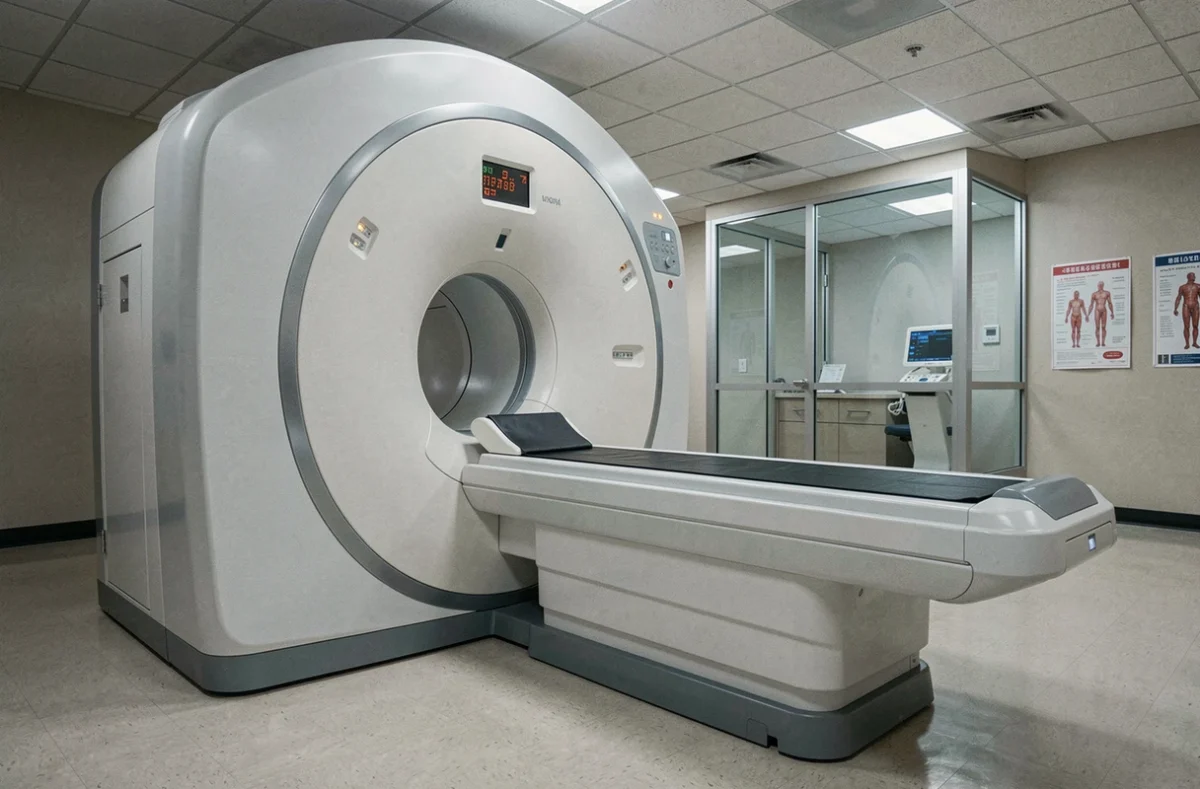
Open MRI machines remain in the minority in the French landscape. There are two categories of equipment to distinguish: truly open MRIs and wide tunnel MRIs, which offer a more generous diameter without completely eliminating the tubular structure.
The distinction matters. A wide tunnel is sufficient for many moderately claustrophobic patients while maintaining high field intensity. A wide tunnel MRI often combines better comfort and superior image quality compared to an open MRI.
In practice, the wait times to access an open MRI are often longer than for a standard examination. The rarity of the machines concentrates demand on a few centers. Expecting several weeks of waiting is common, which can be problematic if the examination is urgent.
What to check before making an appointment
- Confirm with the prescribing doctor that the open MRI (or wide tunnel) is suitable for the requested examination.
- Specify to the center, from the first call, that you are claustrophobic: the team will adjust the duration of the slot and the management.
- Ask if the center offers headphones, an outward-facing mirror, or an enhanced ventilation system in the tunnel.
The choice between open MRI and wide tunnel closed MRI depends as much on the nature of the examination as on the degree of claustrophobia. For moderate anxiety, a wide tunnel machine with good preparation in advance and an attentive team is sufficient in most cases. The open MRI remains of great interest for patients whose confinement triggers panic attacks, provided that the image quality remains compatible with the required diagnosis.