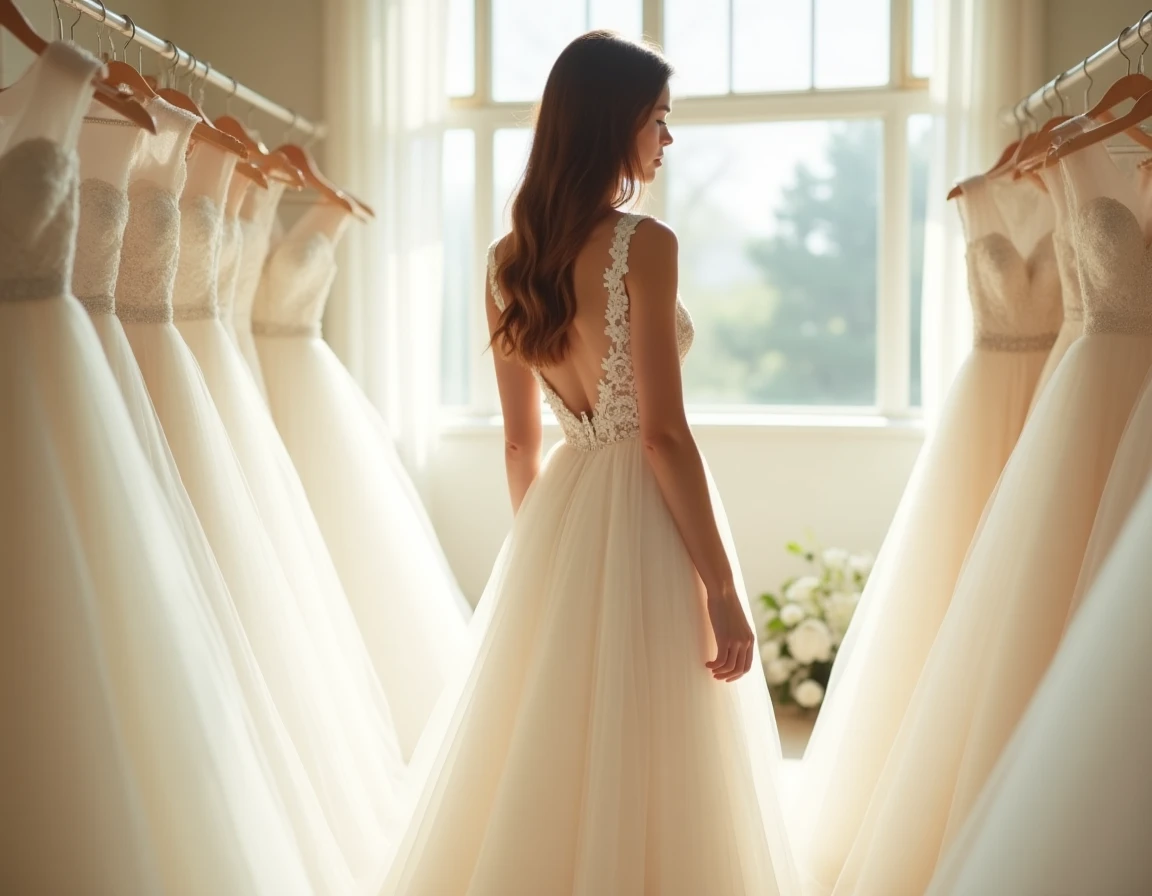
When a boutique offers both princess, bohemian, mermaid, and short dresses, the displayed selection criterion is style. However, for brides returning to the same store, the choice is based on something else: the management of body shape during fittings, the actual comfort of the fabric worn for several hours, and the timeline between the order and the big day.
In-store bridal dress fitting: what matters more than the displayed style

Stores like Les Filles Fidèles, located in Bordeaux, Nice, and Paris, showcase a wide range. The marketing discourse highlights the diversity of cuts and materials. The reality of the fitting appointment follows a different logic.
A bride who enters with a specific idea (V-neck, long sleeves, airy tulle) often finds herself trying on models she hadn’t considered. This shift is not due to the sales talent of the consultant, but to the confrontation between a real silhouette and a fabric that drapes differently on a hanger.
Satin, for example, emphasizes every fold and curve, which suits certain body shapes and detracts from others. Lace layered over an opaque lining alters the perception of the waist. Product descriptions rarely mention these interactions between material and body shape. Some little-known reviews on wedding dresses are starting to document these discrepancies between the online image and the real experience in the fitting room.
Body shape and materials: comparative table of common associations
Rather than classifying dresses by style (princess, bohemian, mermaid), it is more useful to cross the cut with the material and the type of body shape for which the combination works best in real fitting conditions.
| Cut | Dominant Material | Favored Body Shape | Point of Caution |
|---|---|---|---|
| Princess (voluminous skirt) | Tulle, organza | A silhouettes, wide hips | Volume adds bulk, not suitable for petite sizes without length adjustments |
| Mermaid (fitted to the knees) | Satin, crepe | Hourglass silhouettes, defined waist | Satin reveals every seam, requires precise alterations |
| Bohemian (flowy, deconstructed) | Chiffon, lace | Longiline or H-shaped body types | Little support at the bust without integrated structure |
| Short (above the knee) | Lace, embroidery | Petite or athletic silhouettes | Rigid embroidery can limit the range of motion |
The choice of material affects comfort as much as the silhouette. A bohemian dress in lightweight chiffon does not wear the same way as a bohemian dress in heavy lace with lining, even if both carry the same style label.
Timeline before the wedding and alterations: the factor that loyal brides manage
Clients who return to a boutique (for a vow renewal or to recommend the address) share a common point: they have integrated the constraint of the timeline from the first appointment.
Ordering a custom wedding dress requires several months. The production in partner workshops (in France, England, or the Baltic countries depending on the designers) involves a manufacturing timeline to which alterations are added. However, alterations are not a cosmetic detail.
- A hem on multi-layer tulle requires different work than a hem on satin, and the time to complete varies significantly
- A bust adjustment (darts, structure, neckline) often requires two additional fittings after receiving the dress
- Embroidery or raised details (rhinestones, appliqués) complicate any size modification, as moving a seam can break the pattern
Brides who anticipate this timeline choose their dress at least six months before the ceremony. Those who wait too long find themselves with a limited choice of in-stock models, which skews the decision towards available styles rather than desired styles.
Multi-city boutiques and consistency of the bridal dress offer
Les Filles Fidèles operates in three cities (Bordeaux, Nice, Paris), a model that few bridal dress boutiques adopt. The question that future brides rarely ask, but which influences their experience: is the catalog identical from one city to another?
In practice, each showroom has its own models available for fitting. A dress seen on the website or on Instagram is not necessarily available for fitting at the nearest boutique. This gap between the digital display and physical stock sometimes creates frustration, but it also has an advantage.
The consultants guide clients towards what is actually available for fitting on-site, which reduces the paralyzing choice syndrome. With a narrowed selection (the Nice boutique announces over 70 models in the showroom), the fitting becomes a sorting process rather than an endless exploration.
The effect of the cocoon showroom on decision-making
The “cocoon showroom” format mentioned by the Nice boutique is not just a marketing argument. Trying on wedding dresses engages strong emotions, amplified by the presence of loved ones. A privatized, calm space, without waiting lines, alters the perception of the garment being tried on.
Brides who describe their positive experience almost never mention the dress first. They talk about the atmosphere, the time given, the absence of sales pressure. The dress chosen under these conditions is often the one in which they felt physically comfortable, not the one that matched their Pinterest mood board.
The choice of a wedding dress, for clients who return to recommend a boutique, relies less on the cataloged style than on three concrete factors: the material suited to their body shape, a realistic alteration timeline, and a pressure-free fitting. The material, the timeline, and the fitting atmosphere determine final satisfaction much more directly than the cut category listed on the label.