
Adopting a 3-month-old kitten legally binds the adopter well before the first purr. The Rural and Maritime Fishing Code governs every step of the transfer, from mandatory identification to the signing of specific documents. These obligations apply in Île-de-France just as they do throughout France, but the density of the offer in the region (shelters, associations, individuals) multiplies the situations where the legal framework is poorly respected.
Certificate of Commitment and Knowledge: the legal 7-day period
Since the law of November 30, 2021, aimed at combating animal abuse, articles L214-8 and L214-8-1 of the Rural Code require the provision of a certificate of commitment and knowledge to the future owner of a cat. This document must be signed at least 7 days before the actual acquisition of the kitten.
This reflection period is not symbolic. It aims to verify that the adopter has understood the material, financial, and behavioral constraints associated with living with a feline. A transferor, whether an individual or a professional, who hands over a kitten on the same day as the first visit is breaking the law.
On the ground, this certificate is often unknown to the general public. Shelters in Île-de-France systematically issue it, but transfers between individuals, which are numerous in Île-de-France through social media groups, regularly overlook this obligation. Before adopting a 3-month-old kitten in Île-de-France, checking for the presence of this certificate protects both the animal and the adopter in case of subsequent disputes.
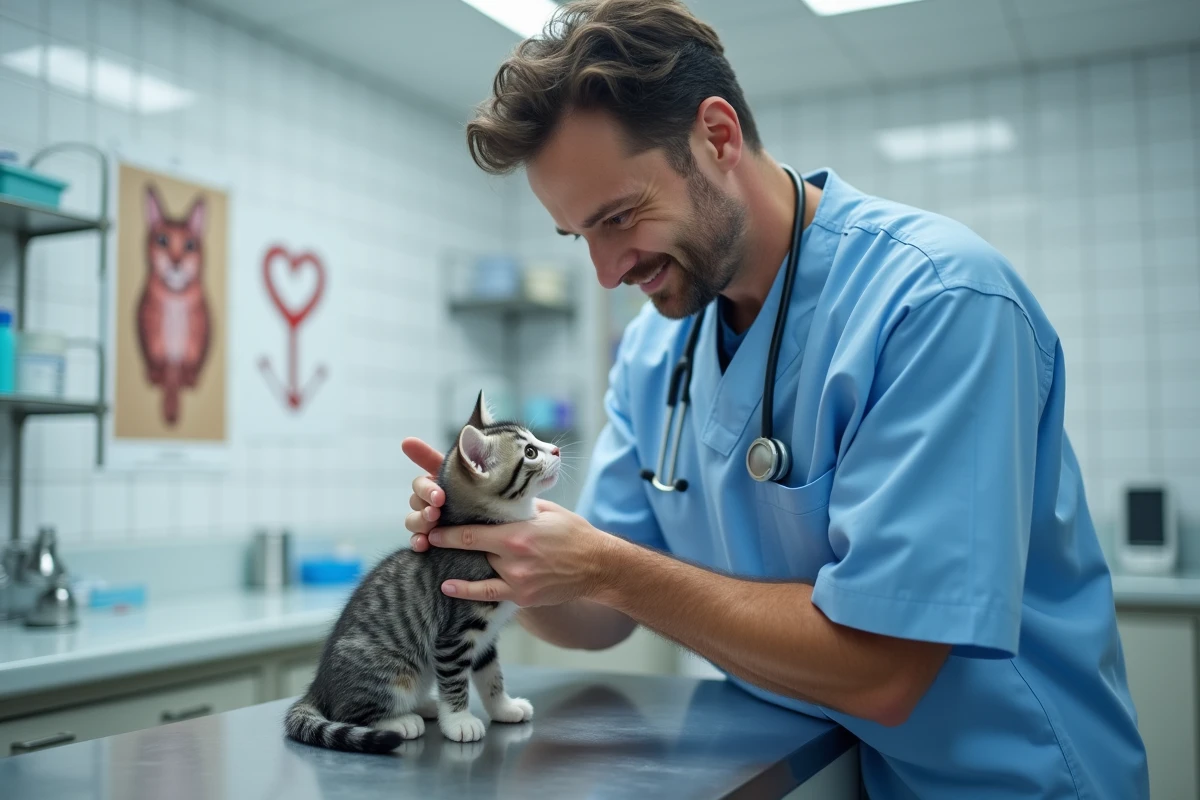
Identification by microchip and kitten transfer documents
A 3-month-old kitten transferred in France must be identified by microchip before the transaction. This identification allows registration in the national I-CAD file, which links the animal to its owner. Without it, the transfer is illegal.
When handing over the kitten, the transferor must provide several documents:
- The veterinary certificate attesting to the animal’s good health at the time of transfer, issued by a veterinarian
- The transfer certificate (or adoption contract for associations), which formalizes the transfer of ownership and mentions the identification number
- The certificate of commitment and knowledge signed at least 7 days prior, as detailed above
- The SIREN number of the transferor if they are a professional or a registered breeder
An individual who publishes an ad without mentioning the identification number of the kitten (or that of the mother if the kitten is not yet identified) is not complying with the regulations. This is a concrete warning signal for any adopter in Île-de-France who is browsing online ads.
Vaccination and European passport: anticipating travel from Île-de-France
At 3 months, a kitten can receive its first vaccinations, but the question of the European passport for pets arises as soon as adoption occurs if you plan to travel. The European regulation (EU) 2013/576 on non-commercial movements of pets imposes three conditions for any movement within the European Union:
- Identification by microchip (already mandatory for transfer in France)
- A valid rabies vaccination, with the initial vaccination only considered valid after a 21-day period
- A European passport issued by an authorized veterinarian
For an adopter in Île-de-France, this means that a weekend in Belgium or a stay in Spain with their kitten requires several weeks of anticipation. The passport is requested from the treating veterinarian, who records the identification and vaccinations. Without this passport, the kitten may be turned away at the border, even for a short car trip to a neighboring country.
Post-adoption abandonments in Île-de-France: understanding the phenomenon to better commit
Shelters and associations in Île-de-France specializing in cats report a sharp increase in the abandonment of young cats and kittens since the post-COVID period. The massive adoptions that took place during lockdowns have resulted, in the following months and years, in a surge of returns of animals whose owners did not fully grasp the long-term commitment involved.
A cat can live for about fifteen years, sometimes longer. Adopting a 3-month-old kitten means committing to a horizon that far exceeds the enthusiasm of the first few weeks. Annual veterinary costs (vaccines, antiparasitics, consultations, sterilization), litter, and age-appropriate food: these recurring expenses often surprise first-time adopters.
Île-de-France shelters and associations: often underestimated support
Serious adoption structures in Île-de-France do not simply hand over a kitten. They check the living environment, ask questions about the household composition (presence of a dog, young children, another cat), and offer post-adoption follow-up. This filtering, sometimes perceived as intrusive, significantly reduces the return rate.
Adopting through an individual on an online group removes this filter. The kitten arrives without follow-up, sometimes without complete legal documents, and the adopter finds themselves alone facing the first veterinary consultations and behavioral questions related to the animal’s adaptation.
The first visit to the veterinarian after adoption allows for checking the general health status of the kitten, planning the vaccination schedule, and laying the groundwork for sterilization, recommended before puberty. This initial appointment also serves to open the kitten’s health record and establish a relationship with the practitioner who will follow the animal over time.
The legal framework protects the kitten as much as the adopter. A complete file (certificate of commitment, transfer certificate, identification, veterinary certificate) constitutes the only solid guarantee in case of hidden health problems or a serious defect. Keeping these documents organized remains the most useful reflex in the first weeks.